Underlay is foundation stitching under the stitches you see. It is not a fourth stitch type. It is built from runs, zigzags, or a light tatami, and its job is to stabilize the fabric and give the top stitches something to sit on. On stretch pique that job is easy to overdo. A heavy blanket under a satin letter shows up as a ridge around the letter, which is the opposite of a clean polo.
Three kinds, three jobs
Edge walk, sometimes called a contour or center run, follows the outline of the object. It ties the edge down before the satin or fill covers it. A zigzag underlay crosses the column in short spans and is what most auto-digitizing drops under every satin. Tatami underlay is a light fill of rows, used under a large area so the top fill does not sink into a soft knit.
None of these is always right. The choice follows the fabric and the object. A cap front, a fleece, and a pique polo do not want the same foundation. The stitch types guide keeps underlay off the run, satin, and fill list for this reason: underlay is a job those stitches are asked to do underneath.
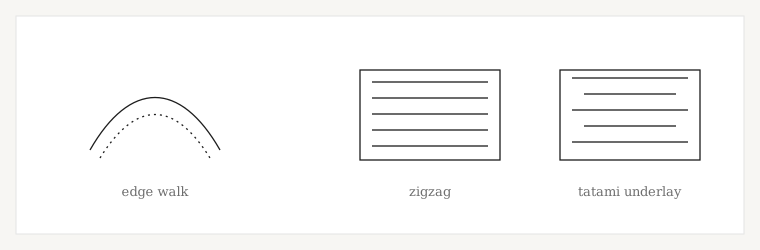
| Underlay | Built from | Holds | Shows when |
|---|---|---|---|
| Edge walk | A run around or through the shape | The edge of a satin or a small letter | The run is so heavy it prints outside the top stitch |
| Zigzag | Short crossing stitches | A column that needs a bed | The column is narrow, or the knit is stretchy, and the zigzag becomes a ridge |
| Tatami | Light rows under a fill | A large soft area | The rows are dense enough to read through the top fill |
Why a blanket zigzag fails on pique
Pique has a texture and, on a performance polo, a good amount of stretch. A full zigzag under every letter does two unhelpful things. It adds penetrations the knit does not need, which is where puckering starts, and it builds a pad that is wider than the satin sitting on it. After the shirt is worn and washed, that pad reads as a halo around the type.
A light edge walk, then a modest zigzag only where the column is wide enough to hide it, is the working model on stretch pique. Narrow letters often need the edge walk alone. Wide columns and small fills can take a short zigzag. A full tatami under a left-chest wordmark is almost never the answer.
This is also why a polo shirt file and a left-chest file are not copies of a hat file. The hat wants structure. The polo wants the least foundation that still keeps the satin from sinking.
When underlay is the wrong fix
If the sew-out still puckers after a lighter underlay, the top stitches may simply be too dense for that knit. Adding more foundation makes it worse. Density is a separate decision, covered in the stitch density guide. Pull that changes the shape of a column is pull and push compensation, not another layer of zigzag.
If the letters are too small for the columns to form, underlay will not save them. Small lettering rebuilds the type instead of packing more stitches under a shape that cannot sew.
What the ridge actually is
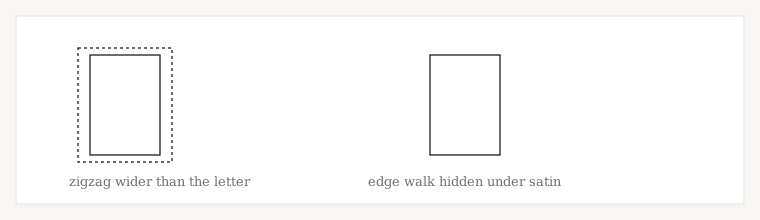
On a sew-out the ridge is not the satin. It is the underlay sticking out past the satin, or pushing the knit up around it. A dashed outline wider than the letter is the usual picture: the zigzag was built to the full column, then the top stitch pulled in, and the foundation stayed.
An edge walk sits on the path the satin will cover. After the top stitch sews, you should not see it. If you can trace a second line around every letter, the underlay is too wide, too dense, or both.
A working map for stretch pique
Column width is the switch. These are not universal millimeters. They are the order of decisions on a polo, before anyone copies a cap underlay onto the shirt.
| The object | Underlay that usually holds | What to avoid |
|---|---|---|
| Narrow satin letter | Edge walk only | A full zigzag that becomes the halo |
| Wide satin column or a border | Edge walk, plus a short zigzag the satin can hide | Tatami under a column |
| Small left-chest fill | Light zigzag or a very open tatami | A dense blanket copied from a jacket |
| Running stitch detail | Often none | Underlay under a line that has nothing to hide it |
| The same art, now on a cap | A different file | This pique map, reused on the crown |
After the shirt is washed
Pique relaxes. A foundation that looked hidden on the hoop can print after the first wash because the knit moves and the underlay does not. That is another reason to keep the stitch count down. If the letters still pucker with a light edge walk, stop adding underlay and look at the top density and at pull. More foundation on a knit that is already packed is how a clean chest becomes a stiff patch.
Send the blank or name the shirt. A fashion pique and a heavy performance knit are not the same give, and the underlay should follow the one you are actually sewing.
Ready when you are