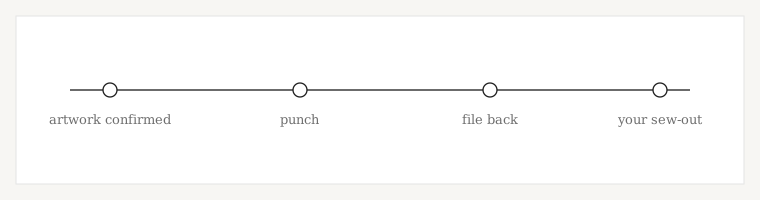
The clock on a punch starts when the artwork, the size, the fabric, and the placement are confirmed. It does not start when the email arrives. A left-chest wordmark with clean art is a short job. A jacket back with ten colors, tiny type, and a photo for reference is not. Quoting one number for both is how shops disappoint the people waiting on the machine.
What the window actually covers
Amazing Punch typical windows run about 6 to 14 hours after the brief is confirmed, for the jobs we see most often: a logo, a left chest, a cap front. That span is punching time. It is not shipping, it is not the time you spend approving a redraw, and it is not a sew-out on your machine.
The how it works page is the process. This note is only the clock: what sits inside those hours, and what quietly moves the job to tomorrow.
| Job | Typical window after the brief is clear | What stretches it |
|---|---|---|
| Left-chest wordmark, clean vector | Toward the short end of 6–14 hours | Tiny type that has to be rebuilt |
| Cap front, one or two colors | Same short window, if the art is simple | Foam, or a design that does not fit the panel |
| Full logo with several stops | The middle of that window | Missing size or fabric, so the punch waits |
| Jacket back or a complex scene | Past a normal day | Color count, detail that will not sew, a redraw |
| Edit of a file you already have | Often shorter than a new punch | The file is a stitch dump with nothing left to edit |
What pushes a job into the next day
- The artwork is a screenshot, a photograph of a sew-out, or a file we cannot open, so someone has to redraw before a single stitch is placed. What to send is covered in what to send so we do not redraw and in the logo preparation checklist.
- Size, fabric, or placement is missing. A column width that is legal on a jacket is not legal on a cap, so the punch cannot start on a guess.
- The mark has type or detail that will not survive at the size you named. Rebuilding that, and confirming you accept the simpler version, is a conversation, not a stitch.
- You need several formats, or a second placement, and those were not on the first brief. Each extra master is its own pass.
Rush is a queue, not a faster needle
A rush order moves the job up the desk. It does not remove the redraw, and it does not make a jacket back into a left chest. If the art is ready and the brief is complete, rush is useful. If the art is not ready, rush only rushes the email that asks for the missing piece.
Send the artwork when you have it. We would rather start the clock on a complete brief than promise a morning file from a logo we have not been allowed to see.
What sits inside the window, and what does not
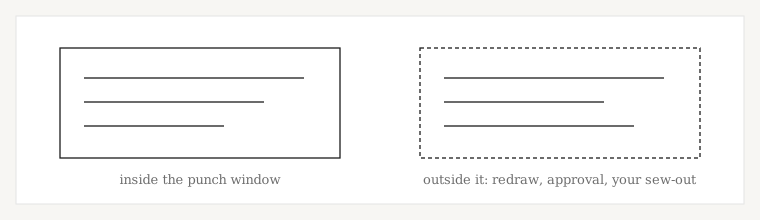
Inside the window is the punch: reading the confirmed art, choosing stitch types, setting density and underlay for the fabric, sequencing the cap if it is a cap, and writing the machine file. Outside the window is everything that has to happen before that is allowed to start, and everything you do after the file is in your inbox.
A quote that says “tomorrow” means tomorrow after the brief is complete. It does not mean tomorrow after a blurry logo arrives at midnight with no size on it.
| Step | On the punch clock? | Why |
|---|---|---|
| You email a logo with no size | No | The desk cannot choose a column width yet |
| We ask which details to drop | No | That is a decision, and it waits on you |
| The art, size, fabric, and placement are confirmed | Yes, the clock starts | The punch can be built without guessing |
| Stitch types, density, underlay, sequence | Yes | This is the work inside the 6–14 hours |
| You sew it on your machine | No | That is your production, after the file is delivered |
How a job stays on the short end
Send a vector, the finished size, the fabric, and the placement in the first email. Say the machine format if you know it. If the mark is a left chest or a simple cap, and nothing in it has to be rebuilt, it sits toward the short end of that 6–14 hour window. If it is a jacket back, a puff cap, or a logo full of type that will not sew, say that too. Naming the hard part up front is faster than discovering it after the file was priced as a simple chest.
The path from first email to a running file is on how it works. What belongs in the email itself is what to send.
Ready when you are